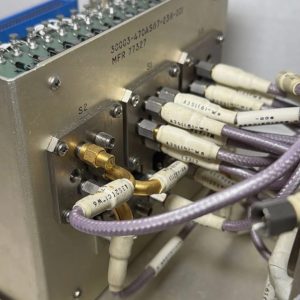
The Aviation Switching Module – NSN 4920-01-250-2696 (AS-IS / Untested) is a specialized aerospace electrical component offered for professional evaluation, restoration, testing, parts recovery, collection, or another suitable non-assumed application.
The Aircraft Switching Module offers potential maintenance or restoration value, while the Aerospace Switching Module must be inspected for condition, completeness, modification, and storage-related deterioration.
Whether buyers search for an Aircraft Electrical Switching Module, Aviation Electrical Control Module, Aircraft Power Switching Module, Aerospace Electrical Control Unit, or Aircraft Signal Switching Module, technical identification should guide the purchase.
An Aircraft Switching Unit can support specialized signal or circuit management, but an Aerospace Power Distribution Module or Aviation Power Control Module may use different internal architecture and electrical requirements.
Overview of the Aviation Switching Module
The seller should provide clear photographs of every label, marking, connector, switch, control, mounting point, enclosure surface, and included accessory.
Unknown markings should be photographed and recorded rather than interpreted without support.
AS-IS Aerospace Equipment Considerations
Internal faults, missing components, damaged wiring, corrosion, previous modification, storage deterioration, or electrical failure may be present even when the exterior appears clean.
A current-limited and controlled test setup may be appropriate when selected by qualified personnel.
Choosing an Aircraft Switching Module
The actual role depends on internal circuitry, switch configuration, connector pinout, associated system design, and technical documentation.
Missing here knobs, guards, labels, connectors, covers, or fasteners may reduce completeness.
Rugged Aviation Module Design
Age, handling, impact, humidity, temperature changes, contamination, and long-term storage can affect both mechanical and electrical condition.
Proper connector protection preserves the Aerospace Switching Module for future testing or restoration.
Evaluating Aircraft Electrical Components
An Aircraft Electrical Switching Module should be inspected for overheated areas, burned insulation, damaged terminals, loose hardware, corrosion, moisture entry, broken controls, and signs of previous disassembly.
If the enclosure is opened for professional inspection, the process should be documented with photographs and organized hardware control.
Aviation Module Interface Considerations
The exact interface must be established through diagrams, manuals, connector data, or verified system information.
Careful preservation supports future study and accurate Aviation Electrical Control Module documentation.
Power Switching Module Inspection
Controlled bench evaluation should be completed by personnel familiar with aerospace electrical hardware.
Any successful limited test should be documented precisely without changing the overall status beyond what was actually verified.
Choosing an Aerospace Electrical Control Unit
Troubleshooting requires a logical sequence based on technical information rather than random power application.
Undocumented modifications can make future troubleshooting and identification more difficult.
Aviation Signal Routing Equipment
The pinout and signal type should be confirmed before continuity or injection testing.
The module should not be modified with unshielded wiring or improvised connectors solely for convenience.
Choosing an Aviation Control Module
A module removed from its original system can be difficult to test without supporting equipment and documentation.
A matching NSN or housing does not always confirm identical internal configuration when modifications or supersessions exist.
Aircraft Switching Unit for Maintenance or Restoration
Detailed condition reporting supports fair commercial evaluation.
Technical schools may use a de-energized module to demonstrate connector inspection, switch construction, equipment identification, documentation research, or safe troubleshooting planning.
Power Distribution Module Inspection
A module should not be loaded electrically until contact condition, insulation, wiring, and circuit configuration are understood.
Preserving the original structure protects the Aerospace Power Distribution Module and its resale value.
Control Unit Connector and Switch Review
The unit should be photographed before and after any preservation work.
Functional evaluation should proceed in stages, beginning with research and non-powered inspection before controlled electrical testing.
Aviation Power Control Module Uses
The NSN’s federal supply classification may provide useful context, but the exact role should still be researched through item-specific records.
Technicians should inspect for capacitors, transformers, relays, damaged insulation, or hazardous residues before opening or testing the unit.
Aircraft Electronic Switching System Integration
An Aircraft Electronic Switching System may consist of multiple modules, harnesses, control panels, relays, indicators, power sources, and associated equipment.
Professional analysis supports responsible Aircraft Electronic Switching System maintenance.
Aerospace Switching Unit Storage and Handling
Desiccant or moisture-control materials should not contact electrical components directly unless appropriate.
Shipping should use cushioning that supports the enclosure while protecting protruding switches, connectors, controls, labels, and mounting points.
Buying AS-IS Aviation Electronics
The potential cost of connectors, manuals, test equipment, repairs, components, and specialist labor should be included in the buying decision.
Transparent disclosure strengthens trust in an Aircraft Electrical Module transaction.
Untested Aviation Equipment Condition Checklist
The AS-IS and untested condition should appear clearly within the title, description, invoice, and transaction terms.
- Determine whether cables, plugs, manuals, test leads, mounting hardware, storage cases, or companion components are included.
- Inspect the enclosure for dents, cracks, corrosion, missing screws, altered holes, broken seals, damaged brackets, and signs of previous opening.
- Require packaging that protects connectors, switches, labels, enclosure corners, mounting brackets, controls, and loose accessories from movement and impact.
Testing the Aviation Switching Module
Testing should begin with identification research, visual inspection, connector mapping, safety review, and examination of available technical documentation.
Powered testing should proceed gradually while monitoring current, temperature, smell, noise, indicators, and unexpected behavior.
Restoring the Aerospace Switching Module
Original labels, wiring routes, fasteners, finishes, and component locations should be preserved whenever practical.
The final product status should describe only the functions that were evaluated successfully.
Selecting a Surplus Aerospace Switching Unit
When responsibly inspected, stored, tested, repaired, and documented, the Aviation Switching Module – NSN 4920-01-250-2696 (AS-IS / Untested) can remain a valuable aerospace electrical component.
Buyers should request detailed photographs, accurate AS-IS disclosures, technical research, secure transaction terms, protective shipping, and qualified evaluation where appropriate.
Whether the requirement is an Aircraft Switching Module, Aerospace Switching Module, Aircraft Electrical Switching Module, or Aviation Electrical Control Module, exact identification should guide the purchase.
With complete evaluation and continued care, the Aviation Switching Module – NSN 4920-01-250-2696 (AS-IS / Untested) can deliver a professional combination of restoration potential, component value, technical interest, and aerospace-equipment relevance.